This person is a professional violinist. He travels to perform and he is the concertmaster at UGA Symphony Orchestra.
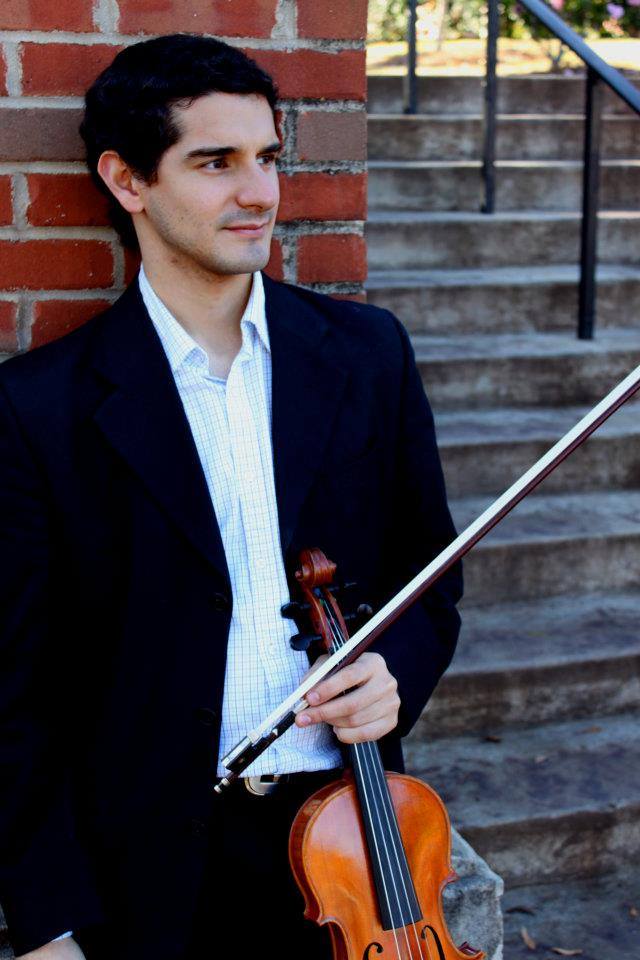
What made you play the violin?
When I was a baby, my dad would always listen to classical music. My grandparents bought an old Spanish house; there were really old things in the house. We were looking to keep [some things] and one of the things that we found was a violin. No bridge, strings, or a bow but just a wood violin. I was four at the time. And I said, I want to play the instrument. My parents thought that I was just being a kid trying different things. People said I was too young to learn the violin at the time. So, for a year, I played a keyboard. And then a year later, when I was about seven, I started to play the violin.
What is so special about music compared to other arts?
To me, it’s just a way that it speaks to me in a way that other arts do like literature and etc. I grew up with classical music and it speaks to my soul. It makes me feel things and elevate me in a way that other arts cannot. In music, for some reason, it constantly changes and moves forward, maybe that makes it [special] unlike a painting that you can see right there in that moment.
What is the toughest thing as a musician or playing an instrument?
As a performer I will say consistency because you know how to do something by practicing a lot and then you go on the stage, but it’s not always the same feeling that you have felt in practice room. Achieving what you have done in practice room into a stage is the hardest thing. Also, in terms of expression, it’s very hard to come up with a unique interpretation and communicating it to the audience. Like knowing what you want audience to feel when you play and finding ways to communicate that with the audience, is very hard to achieve.
What is your favorite piece to play and why?
I can’t come up with one piece but I really like playing Brahms [violin] Concerto but it is one the most difficult pieces that I have played. I really like Bach Sonatas, too.
What does it mean to be a concertmaster (leader) in an orchestra/symphony?
The concertmaster is the point of reference for the whole ensemble to follow. In orchestra, it’s a bigger group so there must be a person to follow for the whole people because the conductor is not going to show everything that a player has to do. Concertmasters have a lot of solos so it’s almost like being a soloist–but at the same time, it’s great [that] you get to lead a big ensemble. As a concertmaster, you not only have to lead but also have to follow the conductor, soloists, and other musicians in an orchestra.
What makes a good musician or performer?
I think it’s finding your own voice and like in other arts, finding your own personality. It’s not just about being technically good and mastering your instrument but finding your own unique interpretation. No people is the same and no instruments are the same. So being a good musician is also someone who has distinct sounds that when someone hears it without seeing, he or she could tell.
Do you think there is perfection in music performance?
No, I don’t think there is perfection. Perfection is what we strive for but we don’t gain it. That’s the beauty of art. You can always do more and do better.
When was the most nerve-racking moment?
Anything that is competing and type of performance that is for a competition–like auditioning for an orchestra.
What is your advice to all musicians?
Practice!!! Fall in love with what you’re doing. You are so lucky to be doing this — it’s one of the most beautiful jobs. And always feel lucky to do something that you love. Have clear goals and focus on that goal.
If you could sit down and have a talk with any composers (dead or alive), who would it be?
Maybe meeting someone like Bach or Beethoven to discuss the aesthetics of music back in the day. I will have so many questions: what were you thinking when you wrote this, how do you play this, and stuff.
Most importantly, what makes you happy?
Music, food, and traveling.
 funeunice
Leave a comment